Thinking about buying land in Ravensdale? Acreage can open up possibilities that a standard homesite cannot, but it also comes with more questions than many buyers expect. If you want to avoid expensive surprises, you need to understand how land use rules, access, and utility service work before you get too far into a deal. Let’s dive in.
Why Ravensdale acreage needs extra homework
Ravensdale is generally governed as unincorporated King County land, which means county zoning and land-use rules can apply outside city limits. That matters because the process for evaluating acreage is different from buying a typical suburban home lot. Before you assume a parcel can support your plans, it helps to confirm jurisdiction, parcel details, and zoning early.
King County directs buyers to use tools like iMap, the parcel viewer, and eReal Property to confirm parcel data and land details. That first step can give you a clearer picture of what you are actually buying. It also helps you spot issues that may affect how you use the property later.
Start with zoning and parcel constraints
Acreage often looks simple at first glance. You may see open space, trees, or a wide lot line and assume there is plenty of room to build. In practice, zoning and site constraints can reduce what is realistically possible.
King County zoning rules control allowed uses, setbacks, and density. The county identifies rural base zones that can include RA-2.5, RA-5, and RA-10. Those zoning categories can shape how a parcel may be used and how much development may be allowed.
Large parcel does not always mean buildable
A parcel can be large on paper and still be heavily constrained. King County advises buyers to review conditions such as critical areas, flood zones, shorelines, steep slopes, wetlands, setback areas, and impervious lot coverage. These factors can affect where improvements may go, or whether they are practical at all.
King County’s Critical Areas Ordinance applies in unincorporated areas and covers wetlands, aquifer recharge areas, fish and wildlife habitat, frequently flooded areas, and geologically hazardous areas such as landslide, erosion, and seismic hazard areas. In other words, the usable portion of a parcel may be much smaller than the total acreage suggests.
Why professional review can matter
If property details are unclear, King County recommends working with a professional consultant who is familiar with local zoning rules and procedures. That recommendation is especially important for acreage, where buffers, slopes, and drainage can affect several parts of your plan at once. A little clarity early can save a lot of time and money later.
Access can make or break a land purchase
One of the biggest acreage questions is simple: can you legally and practically get to the property? Access is not just about whether you can drive there today. It is also about whether the existing access is legal, whether improvements meet county standards, and who maintains the road or driveway.
King County states that a right-of-way use permit is required for any private improvement or use of County right-of-way. A single-family driveway from private property to a King County-maintained road is exempt if it is built to county road standards. That sounds straightforward, but parcel-specific details still matter.
Check driveway standards and maintenance
County road standards say new driveway connections must conform to the standards. They also note that driveway access to arterials may be denied if alternate access exists. On top of that, maintenance of driveway approaches is the owner’s responsibility.
If a parcel uses a private road, maintenance responsibility should be clearly noted on the recorded plat or short plat. That is an important detail for buyers because road upkeep can affect both cost and long-term convenience. It is worth confirming in writing rather than relying on assumptions.
Easements and right-of-way issues deserve a close look
If a driveway, culvert, or utility connection touches county right-of-way, county review may be triggered even if the rest of the property is private. Work on private roads, tracts, easements, or private lands may also require a clearing or grading permit, depending on the amount of work and whether critical areas are present.
King County also requires a preconstruction conference before land clearing or grading on sites that require permit approval. So if your plans involve improving access, not just using it, your timeline may be longer than expected.
Utilities should be verified parcel by parcel
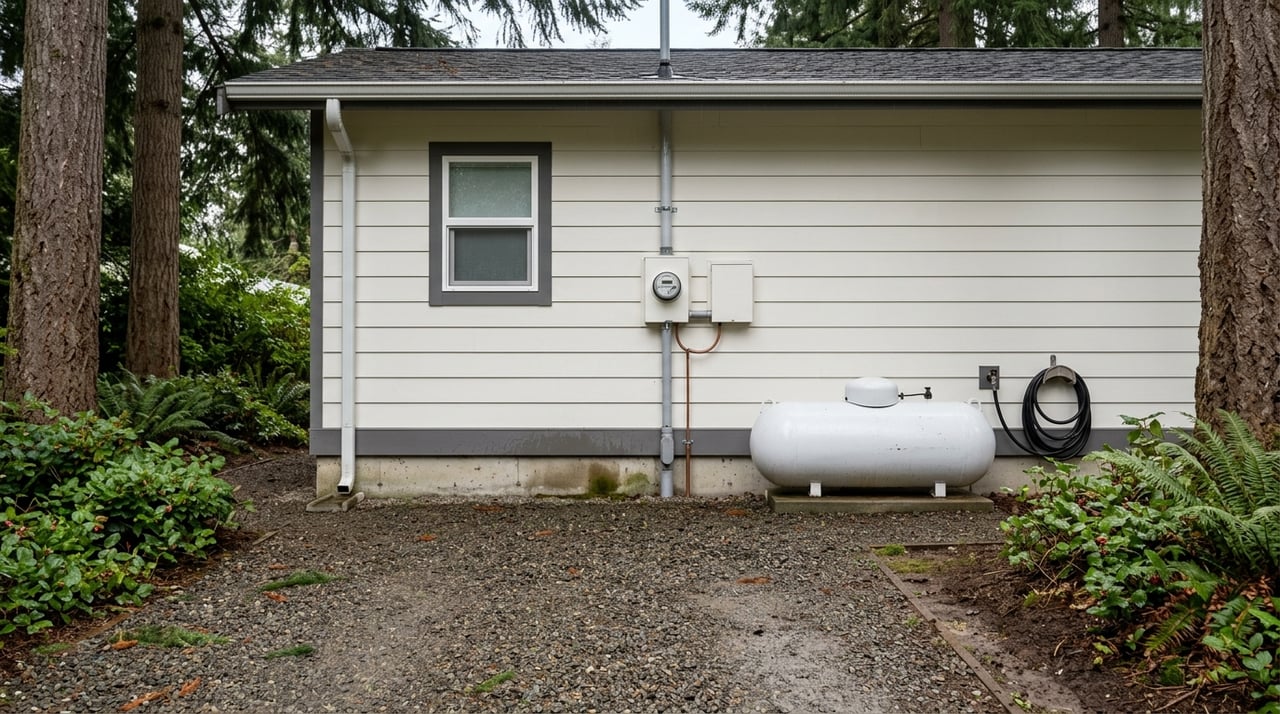
One of the most common acreage mistakes is assuming utility service works the same way as it does on nearby lots. In Ravensdale, utility questions should be answered at the parcel level. King County’s property research guidance says a property report can show water, sewer, and septic details, which makes that a smart place to start.
Even when nearby properties appear improved, you should not assume the same utility setup is available to the parcel you want. Service availability, approvals, and site conditions can vary from one property to the next.
Water service and private well basics
For some parcels, public water may be available. For others, a private well may be part of the equation. King County notes that when public water service is nearby, an applicant must show that water service is not available to the property in order to use an individual private well.
For a new private well, King County requires several items, including an Ecology well report, a pump test, water-quality samples, and a signed, notarized, recorded private well covenant. If approved, the well may be used to support a septic system as an approved water source. That is one reason water planning and septic planning often need to be evaluated together.
Septic feasibility takes more than guesswork
If a parcel is not served by sewer, septic feasibility becomes a major part of your due diligence. King County says building application approval is required before most building permits can be issued so Public Health can review impacts to the septic system. Septic inspections are intended to protect drinking water and nearby waterways.
King County also notes that a conforming system is more favorable when a lot has at least 10,000 square feet if served by public water or 5 acres if served by an individual private water source. Still, the county says a licensed designer or engineer is needed for a definitive answer. That means buyers should treat septic as a technical review item, not a simple yes-or-no assumption.
A practical due diligence checklist
When you buy acreage in Ravensdale, the order of operations matters. Many land questions have to be answered in sequence, not all at once. That is why feasibility periods for acreage often need more room than a standard home purchase.
A practical due diligence path includes:
- Pull the property report and iMap data
- Confirm the parcel is in unincorporated King County if applicable
- Verify zoning and any critical-area overlays
- Confirm legal access and road maintenance responsibility
- Review whether driveway, culvert, or utility work may affect county right-of-way
- Check water, sewer, septic, and private well feasibility
- Bring in septic, well, or land-use professionals before contingency deadlines
King County warns that incomplete permit submittals will not be accepted and can delay the application process. That makes early organization especially helpful when you are trying to stay on schedule.
What timeline should you expect?
Acreage purchases in Ravensdale often take more time to evaluate than a typical home on a finished lot. Access, critical areas, wells, septic review, and permitting can all affect each other. If one piece is delayed, the rest of the review process can slow down too.
That does not mean acreage is too hard to buy. It means you are better served by going in with a realistic plan, a clear checklist, and enough time to investigate the property properly. With the right preparation, you can make a more confident decision about whether a parcel truly fits your goals.
Smart questions to ask before you buy
If you are comparing acreage options in Ravensdale, keep these questions front and center:
- Can the parcel support the home or use you have in mind under current zoning?
- Are there wetlands, steep slopes, flood concerns, or other critical-area constraints?
- Is the access legal, built to the right standards, and practical year-round?
- Who maintains the driveway or private road?
- Is water service available, or would a private well need approval?
- Will septic fit once setbacks, buffers, and site conditions are considered?
- Could clearing, grading, or right-of-way improvements trigger additional county review?
These questions can help you separate a promising property from one that may create more cost and complexity than expected.
Buying land should feel exciting, not overwhelming. When you understand the county rules, access details, and utility questions upfront, you put yourself in a much better position to choose the right property. If you are exploring acreage in Ravensdale and want clear, local guidance through the process, the Tamara Paul Group is here to help you navigate the details with confidence.
FAQs
What should you check first when buying acreage in Ravensdale?
- Start by confirming parcel details, jurisdiction, zoning, and land information through King County property research tools such as iMap, the parcel viewer, and eReal Property.
How does zoning affect acreage in Ravensdale?
- King County zoning can control allowed uses, setbacks, and density, and parcel-specific constraints like wetlands, slopes, and buffers can further limit what the land can support.
Why is access so important for Ravensdale land?
- Legal and practical access affects whether you can use the property as planned, whether a driveway meets county standards, and who is responsible for maintenance.
How do utilities work for acreage in Ravensdale?
- Water, sewer, and septic status should be verified parcel by parcel through King County records because utility availability can differ even between nearby properties.
Can you add a private well on Ravensdale acreage?
- A private well may be possible, but King County requires specific documentation and may require proof that public water service is not available to the property.
What should you know about septic on Ravensdale acreage?
- Septic feasibility depends on parcel conditions, setbacks, water source, and site review, and King County says a licensed designer or engineer is needed for a definitive answer.
Do acreage purchases in Ravensdale usually take longer?
- Yes. Acreage due diligence often takes longer because zoning, access, critical areas, utilities, and permitting may need to be reviewed in sequence before you can move forward with confidence.