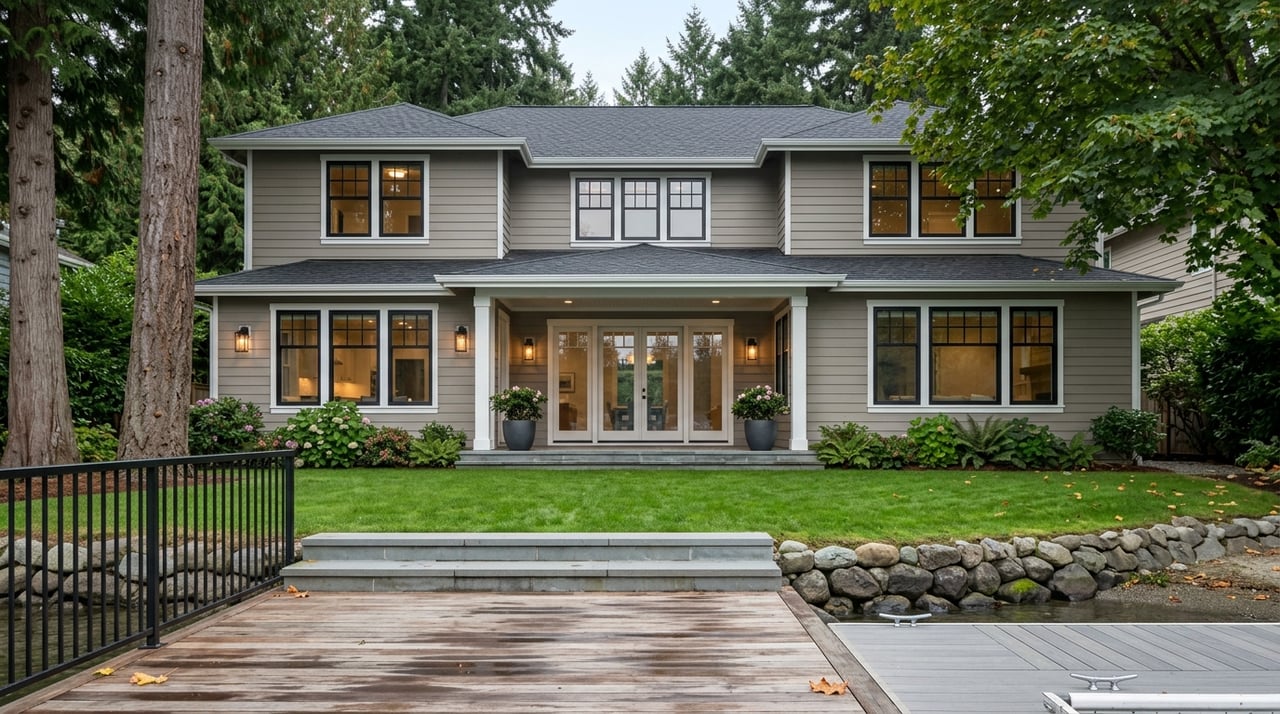
Dreaming about a Lake Tapps waterfront home? It is easy to focus on the view, the dock, and the idea of summer on the water. But buying here comes with a few layers that do not apply to a typical suburban home, and knowing them upfront can save you time, money, and stress. In this guide, you will learn the key facts to verify before you buy, from water levels and dock permits to access rights, septic systems, and shoreline rules. Let’s dive in.
Why Lake Tapps Is Different
Lake Tapps is not a conventional natural lake. It is a managed reservoir operated by Cascade Water Alliance, which owns the reservoir lakebed and shoreline up to the 545-foot elevation line.
That matters because water levels change by season. Cascade says the typical recreational pool runs from 541.5 to 543 feet from April 15 through September 30, while winter drawdown commonly lowers the reservoir to about 538 to 539 feet for dike stability and maintenance.
For you as a buyer, that seasonal change can affect how a property actually functions. A dock that looks ideal in July may sit very differently in winter, and shoreline improvements like lifts, bulkheads, ramps, and boat storage need to work across changing water levels.
Cascade also raises the reservoir to 543 feet each year so residents can see the maximum water level on their property. That gives you a useful benchmark when evaluating shoreline design, erosion exposure, and usable yard space.
What to check about water levels
Before you move forward, ask questions that go beyond the summer showing.
- Confirm how the lot functions at winter pool and at summer full pool
- Verify whether the dock, lift, or bulkhead was designed for the 543-foot maximum
- Ask whether boats need to be trailered or removed seasonally
- Check whether lower winter water affects access from the dock or shoreline
Permits Matter More on Waterfront
One of the biggest surprises for waterfront buyers is that shoreline improvements usually involve more than a standard building permit. On Lake Tapps, Cascade requires a license before a homeowner modifies or adds improvements on Cascade property, including docks, boat lifts, bulkheads, ramps, and boathouses.
Cascade also states that these projects may need other local, state, or federal permits. In other words, even if an improvement already exists, you should not assume it was fully approved or that replacing it later will be simple.
Pierce County also treats waterfront work as a regulated permitting issue. Its residential permit guidance specifically lists docks, piers, and gangways among items that may require review.
For Lake Tapps properties, shoreline rules can also apply to smaller features than many buyers expect. Pierce County’s shoreline update shows Lake Tapps-specific setback rules for features such as fences and access paths.
Shoreline path rules to know
If you are imagining a simple path from the house down to the water, there are still limits. Pierce County says an access path may be no wider than 4 feet, should be kept as direct as feasible, must avoid tree removal, and may not place fill in a floodplain.
That means future plans for landscaping, access upgrades, or shoreline changes should be reviewed early. What looks minor on paper can still trigger review.
Documents to request before you buy
Ask for the paper trail, not just the seller’s description.
- Confirm whether there is a Cascade license for any existing dock or bulkhead
- Request permit history for prior repairs, replacements, or additions
- Ask whether a planned remodel could trigger shoreline review, floodplain review, or both
- Verify whether any work extends onto Cascade-owned property
Access Rights Can Change the Value
Not every waterfront or water-oriented property on Lake Tapps offers the same kind of access. Planning and management are coordinated through Cascade community agreements, and access can depend on deeded rights, shared rights, community terms, or location-specific arrangements.
Cascade says it allows property owners adjacent to some dikes to cross over the dikes for recreation. That makes recorded access rights and community rules especially important to verify during your due diligence.
Seasonal and jurisdiction-specific rules matter too. Washington Department of Fish and Wildlife notes that Lake Tapps is open year-round, but winter and early-spring water levels may limit boat access, and public shoreline access remains limited at public access sites.
The City of Bonney Lake has also stated that for the 2026 boating season, the Allan Yorke Park launch is open only to Bonney Lake residents with a resident pass required for launch parking. The city also notes that mandatory boater education cards apply for most operators of motorized vessels with 15 horsepower or more.
Questions to ask about access
A beautiful shoreline view does not always mean simple daily use. Make sure you understand exactly what comes with the property.
- Is access deeded, shared, membership-based, or revocable?
- Are launch privileges included?
- Is trailer parking allowed?
- Can guests use the dock, beach, or launch?
- Are there separate rules for the lakefront lot, community beach, or private launch?
Inspections Need to Go Beyond Standard
A standard home inspection is important, but it is usually not enough for a waterfront purchase on Lake Tapps. Depending on the property, you may also need a septic contractor, a shoreline or dock specialist, a surveyor or permit reviewer, and sometimes a well or flood-related review.
This is where an education-first approach helps. Instead of treating inspections as a checklist, think of them as a way to understand the home’s ongoing ownership costs and limits.
Septic requirements for Pierce County sales
If the property uses septic, Tacoma-Pierce County Health Department requires a Report of System Status for property sales in Pierce County. The system is typically pumped and inspected before sale, and the report states the condition of the system.
The Report of System Status is valid for one year. TPCHD also notes that a conditional 90-day report may be used when deficiencies remain.
For buyers, this is one of the first items to verify. Septic condition can affect both near-term costs and whether other site improvements are practical.
Water source questions to verify
Not every home will be on the same water setup. TPCHD says many residents outside city limits use small systems or individual wells, and new wells in Pierce County require permits.
That means you should confirm early whether the home uses city water, a shared system, or a private well. Water source affects maintenance, documentation, and in some cases your comfort with long-term ownership.
Flood and elevation review
Flood risk is also worth checking, even when the property is on a lake and appears stable. Pierce County provides flood-risk map information, floodplain-zone data, floodway and base-flood-elevation resources, and elevation-certificate references for unincorporated Pierce County.
The county notes that staff provide map information assistance rather than official flood determinations. Still, reviewing the property’s flood-related status early can help you understand building limits, insurance questions, and future project constraints.
Ongoing Waterfront Maintenance Counts
Owning on the water can be rewarding, but it also comes with environmental maintenance. On Lake Tapps, water quality is monitored by both Tacoma-Pierce County Health Department and Cascade, including toxic algae and bacteria at Allan Yorke and North Lake Tapps County parks.
They also note that nutrients from fertilizers and failing septic systems can feed milfoil and algae blooms. Cascade manages milfoil treatment, and in some cases HOAs and individual homeowners may be able to pay for targeted treatment in front of residences through Cascade’s permit process.
Any hand removal of aquatic plants must follow Washington Department of Fish and Wildlife rules. For you as a buyer, this means recurring shoreline upkeep may be part of ownership, even if the home itself is in great shape.
Ask about recurring costs
Before you buy, try to build a realistic picture of annual maintenance.
- Ask about recurring algae or milfoil issues
- Ask whether there have been erosion or drainage concerns
- Verify whether septic maintenance has been routine and documented
- Find out whether shoreline treatment costs are handled individually or through an HOA
A Smart Lake Tapps Buying Checklist
When you are comparing Lake Tapps properties, this short list can help you focus on what matters most.
| What to Verify | Why It Matters |
|---|---|
| Seasonal water levels | Affects dock use, shoreline access, lifts, and storage |
| Cascade licenses | Confirms whether shoreline improvements were authorized |
| Permit history | Helps reveal repair, replacement, or compliance issues |
| Access rights | Clarifies whether water use is deeded, shared, or restricted |
| Septic status | Required in many sales and important for future costs |
| Water source | Confirms whether the home uses city water, a shared system, or a well |
| Flood-related factors | May affect insurance, project feasibility, and site use |
| Algae, milfoil, drainage | Signals ongoing maintenance and ownership demands |
Why Local Guidance Helps
Lake Tapps waterfront homes can be incredible places to live, but they reward buyers who ask detailed questions early. The right property is not just about the view. It is also about access, approvals, maintenance, and how the lot performs year-round.
When you have a local team that knows Pierce County, understands how waterfront due diligence differs from a standard purchase, and values clear communication, you can move forward with more confidence. If you are thinking about buying on Lake Tapps, the Tamara Paul Group can help you evaluate the details, understand the tradeoffs, and find a home that fits how you want to live.
FAQs
What makes buying a Lake Tapps waterfront home different from buying on a typical lake?
- Lake Tapps is a managed reservoir with seasonal water-level changes, so you need to evaluate docks, shoreline improvements, and access at both summer and winter levels.
Do Lake Tapps docks and bulkheads need permits or licenses?
- Yes. Cascade requires a license for many shoreline improvements on its property, and Pierce County may also require permit review for items such as docks, piers, gangways, and related work.
What should you verify about Lake Tapps waterfront access before buying?
- You should confirm whether access is deeded, shared, membership-based, or revocable, and whether launch use, guest use, trailer parking, or dock rights are included.
Is a septic inspection required when buying a waterfront home in Pierce County?
- If the property uses septic, Tacoma-Pierce County Health Department requires a Report of System Status for the sale, and the report is typically based on a pumped and inspected system.
How do you check flood risk for a Lake Tapps waterfront property?
- You can review Pierce County flood-risk map information, floodplain-zone data, and elevation-related resources early in the buying process to better understand site constraints and related costs.
What maintenance issues should you ask about on a Lake Tapps waterfront home?
- Ask about algae, milfoil, erosion, drainage, septic maintenance, and any recurring shoreline treatment or repair costs tied to the property.