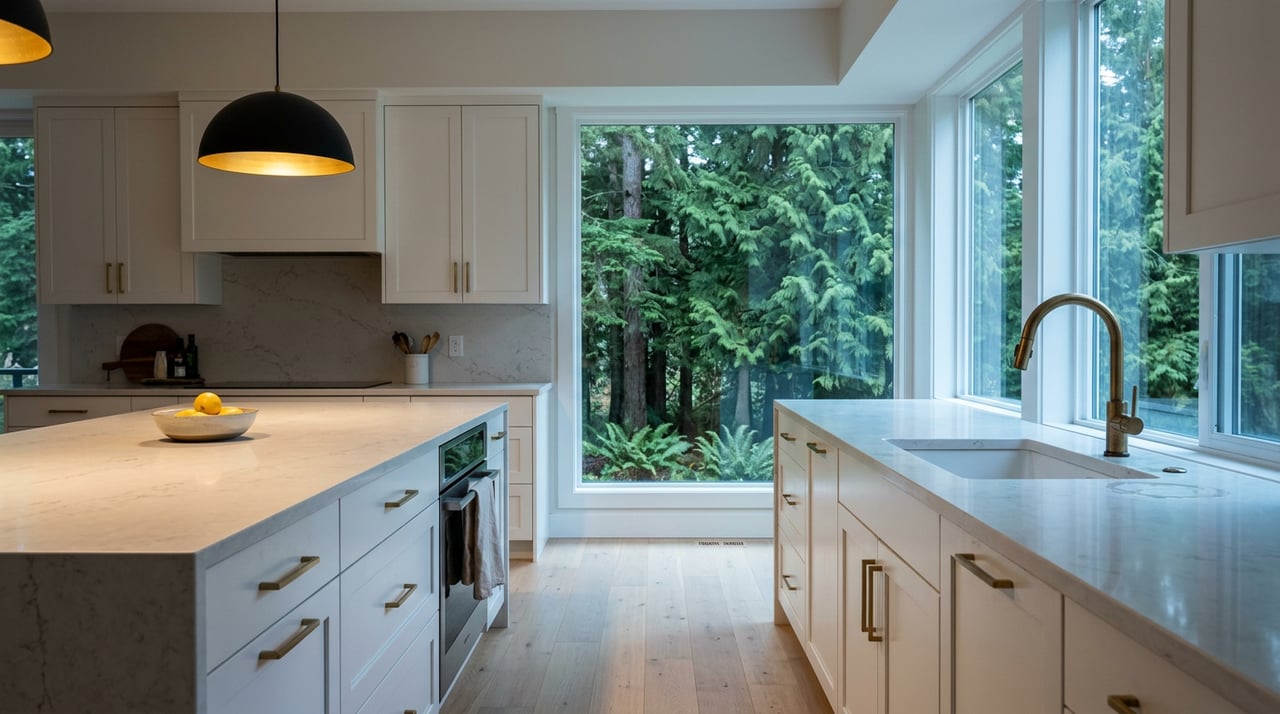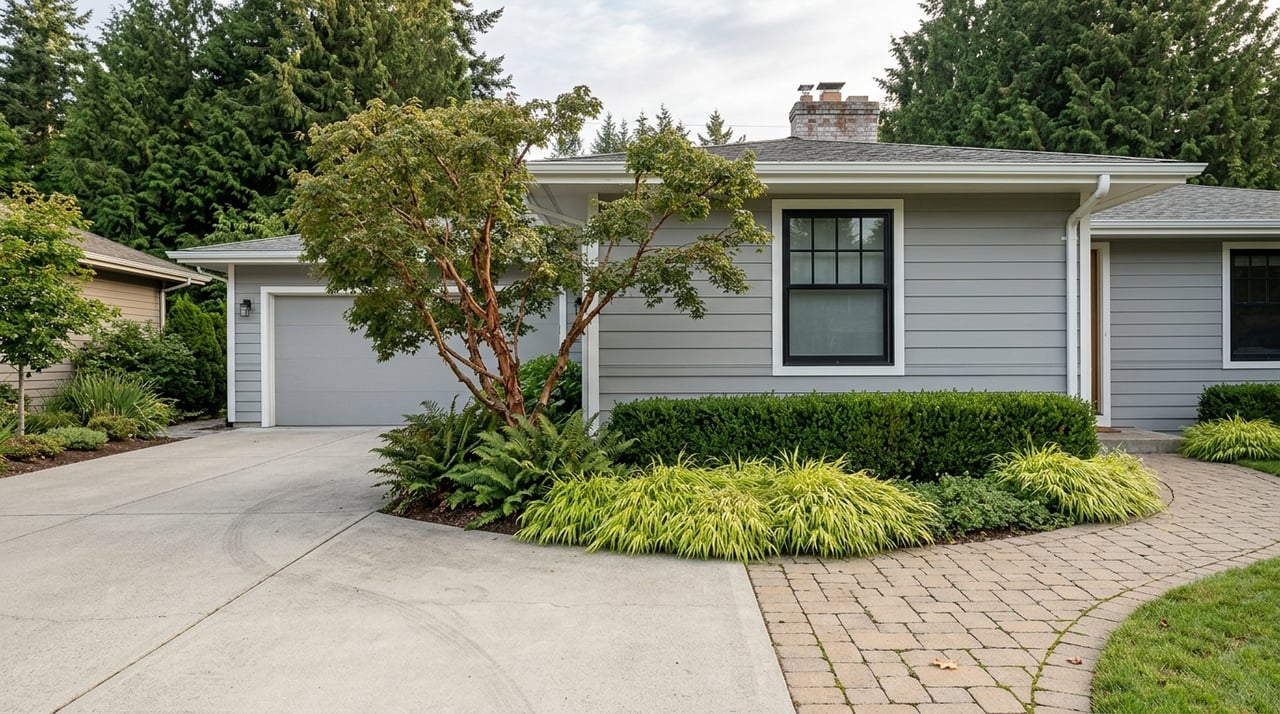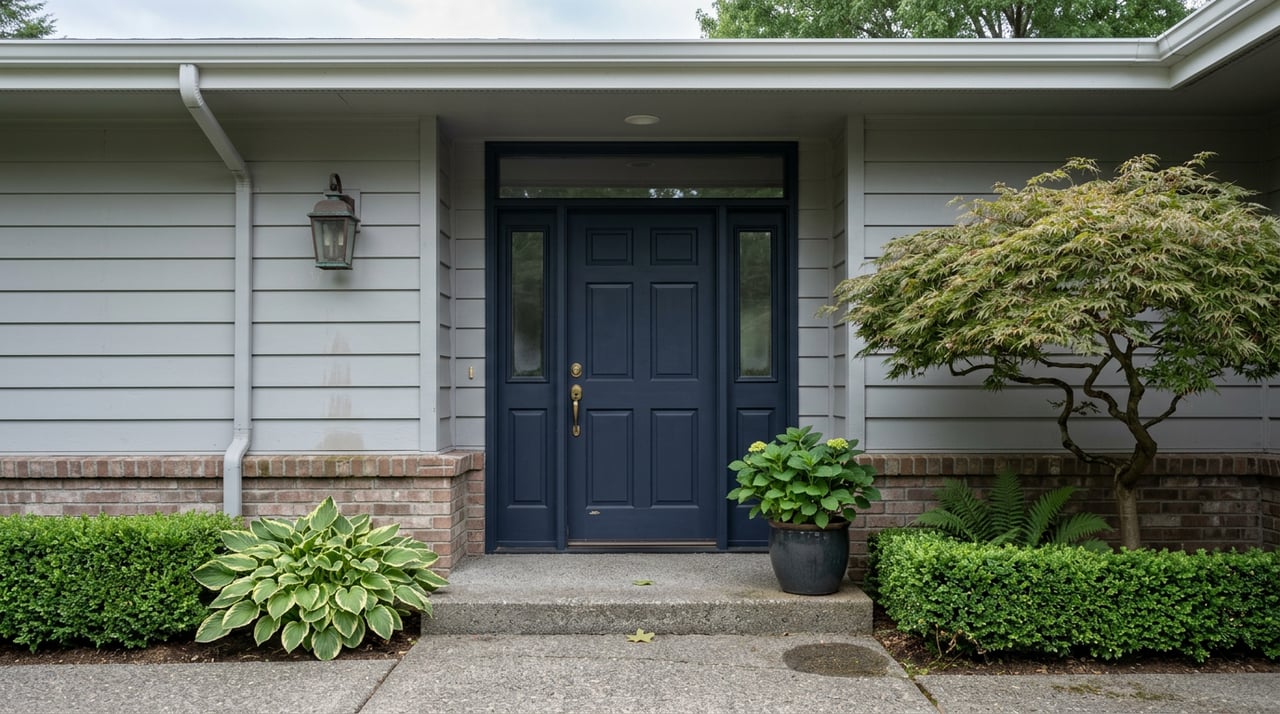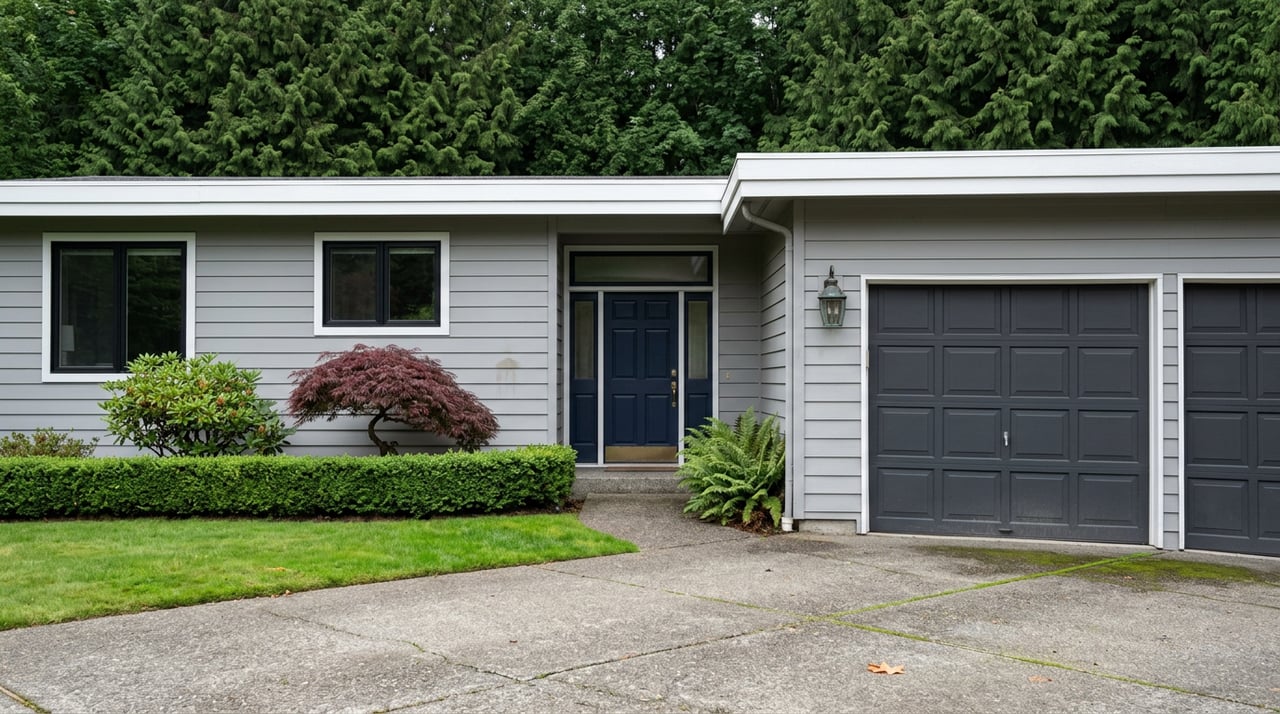
Drive from Lea Hill down through downtown Auburn and out to Lakeland Hills on a clear August afternoon and you'll pass through what looks, on paper, like one city. It isn't. Near Green River College the streets are lined with newer single-family subdivisions and manufactured-home communities packed tight against the hillside. Ten minutes south, downtown thins into older bungalows and a Sounder platform. Another fifteen minutes and you're inside gated communities with names like Verona North and the Reserve, HOA-maintained trails winding between homes that straddle the King-Pierce county line. Same city. Same school district for most of it. Completely different housing markets, each moving at its own speed.
That matters more than it sounds like it should, because almost every number a buyer or seller sees first is a citywide average that flattens all four of these places into one line. As of August 2026, Auburn homes carry a median asking price around $599,000, with homes spending a median of 46 days on the market. Recent closed sales cluster closer to $583,000, with the city as a whole receiving an average of two offers per listing and taking closer to 58 days to go pending. That's a market description, but it's not Auburn's market. It's a blend of at least four markets that don't behave anything alike.
Lea Hill Is Moving Faster Than the City Average Suggests
Up near Green River College, Lea Hill has quietly become the fastest-appreciating pocket in Auburn. Over the three months ending June 2026, homes there sold for a median of $741,000, up 9.0% from the same period a year earlier. Homes are going pending in 12 to 15 days on average, and Redfin's compete score puts Lea Hill at 76 out of 100, solidly in "very competitive" territory. Multiple offers are common, and some of them come in with contingencies waived.
That's a striking number to land on a neighborhood that draws first-time buyers and young families toward newer subdivisions and Green River College housing stock. It's also higher than the citywide median by a wide margin, which tells you something the average Auburn buyer doesn't expect walking in: this is not the affordable outer edge of the market. It's one of the tighter ones.
Lakeland Hills Has the Reputation. It Doesn't Have the Speed.
Lakeland Hills carries Auburn's move-up reputation, and the listing copy backs that up. Gated sections like the Reserve, Verona North, and Ashton advertise soaring ceilings, granite islands, and HOA dues that cover the parks and trails threading through the community. It's the version of Auburn people picture when they imagine trading up.
The market data tells a slower story. Homes in the Lakeland area have been selling for an average of $502,000 in recent months, up 9.1% year over year, but with a compete score of 65 and a median 44 days to pending. That's noticeably slower than Lea Hill despite a similar rate of price growth. Split the inventory further and the picture sharpens: condos there carry a median list price around $433,000 and average just one offer over 31 days on market, while the five-home luxury tier sits at a $625,000 median list and takes a full 69 days to move. Lakeland Hills isn't underperforming. It's bifurcated, with entry-level product moving at an ordinary pace and larger, pricier homes sitting longer than buyers browsing the neighborhood's marketing might assume.
North Auburn Is Winning on Speed, Not Price
If you want the fastest-moving corner of the city, skip both of the above and look at North Auburn instead. Over the three months ending June 2026, homes there sold for a median of $520,000, up 2.7% year over year, with a compete score of 83, the highest of any Auburn submarket in this comparison. Homes are averaging just 11 days on the market, and many sales involve multiple offers with contingencies waived.
North Auburn's price sits below Lea Hill's, which is the part worth sitting with. Price alone isn't what's driving the competition here. This is the affordability sweet spot in the city, close enough to shopping and commuter routes that budget-conscious buyers are moving on it the moment it lists, regardless of what the citywide median suggests they should expect to pay.
Downtown's Slow Corner Has a Reason to Change
Auburn's condo and townhome stock closest to the Sounder platform has historically been the entry point into the city, and it's the piece of this market least captured by the neighborhood breakdowns above. It's also sitting downstream of some real, currently funded construction.
The city demolished its aging downtown theater in the spring of 2024 after it was condemned in early 2022, and it has secured full funding for a replacement: a roughly 290-to-310-seat, up to 10,300-square-foot performing arts venue designed by the architecture firm Otak, with construction mobilizing this spring and running now through a targeted mid-2027 completion. A new park is being built alongside it, connecting B Street Plaza across Main Street to the Postmark Center for the Arts, funded in part through a King County Conservation Futures Grant that requires at least 85% of the site to remain green space permanently. Both projects are coordinated to finish together in mid-2027. Separately, the city's multi-phase widening of Auburn Way South between Hemlock Street SE and Redwood Court, adding curbs, sidewalks, stormwater infrastructure, and pedestrian crossings, was targeted to wrap by this spring, putting the corridor in its final stretch as of this summer.
None of that guarantees a price move in downtown condos. Infrastructure and cultural investment don't work like a light switch. But a downtown corridor that's getting a rebuilt theater, a new connective park, and a widened, better-lit main corridor within the same 12 to 18 months is not the same corridor it was two years ago, and buyers weighing entry-level condos near the Sounder platform against pricier single-family stock elsewhere in the city are making that decision against a backdrop that's actively changing underneath them.
Where This Actually Costs People Money
Here's the mistake that shows up again and again once you're looking at the data submarket by submarket instead of city by city: pricing a Lakeland Hills resale off a Lea Hill comp, or valuing a downtown condo against either one. They're not the same product moving through the same buyer pool at the same speed, and treating them that way produces listings that sit too long or offers that come in too low.
Auburn's median price isn't wrong. It's just describing a city that doesn't exist as one market anywhere except on the spreadsheet.
A seller in Lakeland Hills pricing against Lea Hill's 12-day absorption rate will misread how long their own listing is likely to sit. A buyer assuming North Auburn's $520,000 median means less competition than Lea Hill's $741,000 will be caught off guard by an 83-out-of-100 compete score and an 11-day sale cycle. And a buyer looking only at the citywide $599,000 asking price will walk into North Auburn or Lea Hill expecting more breathing room than either submarket is currently giving anyone.
What This Means If You're Looking in Auburn Right Now
New construction adds another wrinkle worth knowing before you start comparing prices. D.R. Horton's Walnut Lane community in Auburn has been offering buyer incentives including a preferred-lender bonus this year, while D Moore Builder of Dreams has been building modern ramblers at River Rock Auburn on corner lots near the Green River, several with river and territorial views. Builder incentives shift month to month, so treat any specific offer as a starting point for a conversation rather than a guarantee, but knowing these communities exist by name gives you a real comparison point against resale inventory in the same part of the city.
The honest takeaway is that Auburn rewards buyers and sellers who ask "which Auburn" before they ask "how much." A single median price can tell you the city is affordable relative to Seattle. It can't tell you whether the specific street you're looking at is going to move in 11 days or 60.
FAQ
Is Auburn a buyer's market or a seller's market right now? It depends entirely on which part of the city you mean. North Auburn and Lea Hill are behaving like seller's markets, with compete scores in the high 70s and 80s and homes moving in under two weeks. Lakeland Hills and the citywide average look more balanced, with homes taking closer to six to eight weeks to sell.
Where should a first-time buyer start looking in Auburn? Lea Hill and North Auburn both offer newer or more affordable stock, but both are also the fastest-moving submarkets in the city right now, so buyers should expect competition and be ready to move quickly once a home lists.
Does the downtown theater and park project affect home values today? Not yet in any way you can point to in a sales report. What it does is signal that the corridor is in the middle of a funded, multi-year investment cycle, which is worth factoring into a longer-term view of that part of the city rather than a decision about this month's asking price.
If you're trying to figure out which version of Auburn actually fits your budget and your timeline, that's exactly the kind of neighborhood-by-neighborhood read The Tamara Paul Group does for every client. Get Your Free Home Valuation and let's talk through what your specific corner of Auburn is actually doing right now.